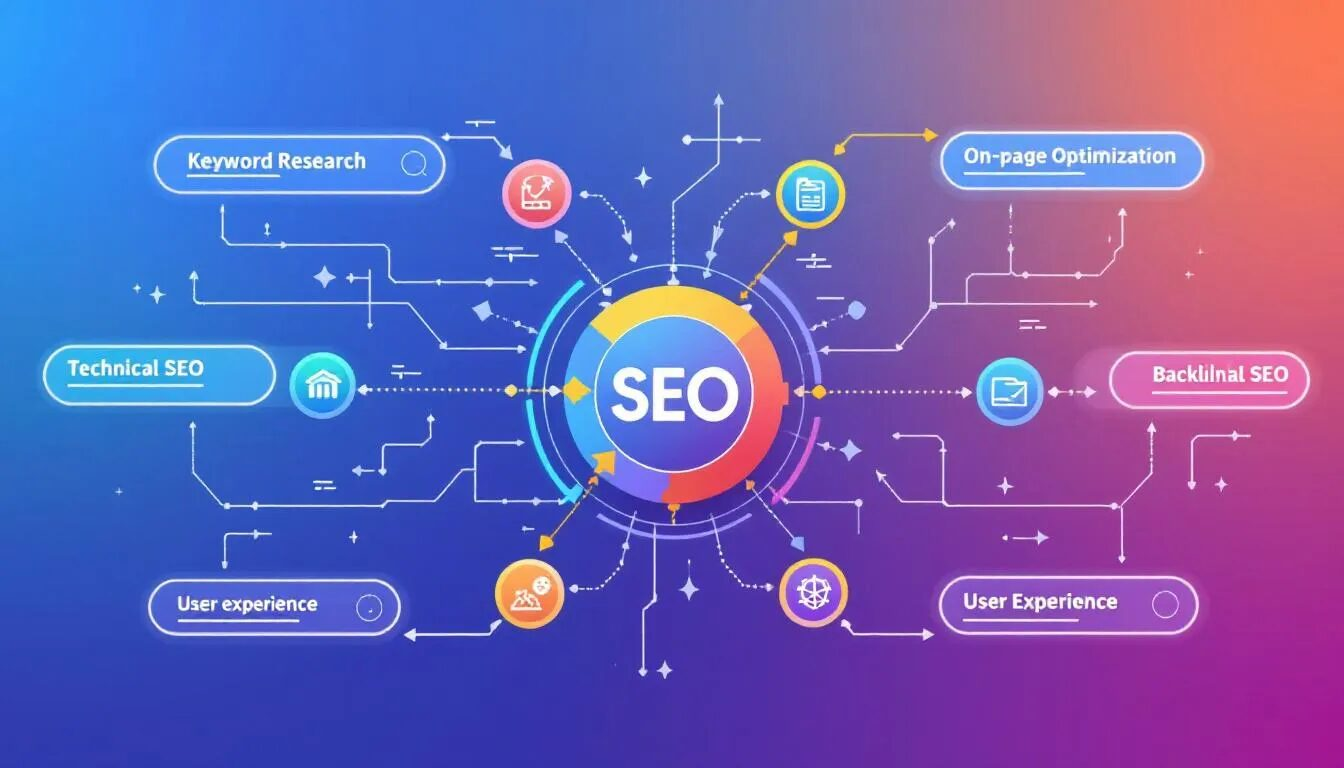
If you are new to websites, blogging, or online business, SEO can feel confusing at first. You may have heard people say things like “SEO is dead,” “Google keeps changing the rules,” or “You need technical skills to rank on Google.” For beginners, all this noise often makes SEO sound far more complicated than it really is.
The truth is simple: SEO is about helping people find your content when they search online. Once you understand the basics, SEO becomes a logical process rather than a mystery.
In this beginner-friendly guide, you’ll learn SEO Basics for Beginners basics step by step, in plain language, without technical jargon. By the end, you’ll clearly understand how SEO works, why it matters, and how you can start applying it even if you have zero prior experience.
What Is SEO? (Beginner Explanation)
SEO stands for Search Engine Optimisation.
In simple words, SEO is the process of improving your website so that it appears higher on search engines like Google when people search for something related to your content, product, or service.
When someone types a question or keyword into Google, the search engine shows thousands (sometimes millions) of possible pages. SEO helps Google decide which pages deserve to appear at the top and which ones stay buried.
For beginners, the most important thing to understand is this:
SEO is not about tricking Google — it’s about helping Google understand your content and helping users get better answers.
Why SEO Is Important for Beginners
Many beginners wonder whether SEO is even worth learning. The answer is yes — especially if you want sustainable online growth.
1. SEO Brings Free Traffic
Unlike ads, SEO doesn’t charge you for every visitor. Once your page ranks, traffic can come daily without extra cost.
2. SEO Builds Long-Term Results
Ads stop working the moment you stop paying. SEO keeps working for months or even years if done properly.
3. SEO Builds Trust
Users trust organic search results more than sponsored ads. Ranking high signals authority and credibility.
4. SEO Helps Beginners Compete
Even small websites can outrank big brands by targeting the right keywords and search intent.
5. SEO Improves User Experience
Good SEO naturally improves site speed, structure, readability, and usability.
How Search Engines Work (Basics You Must Know)
Before learning SEO tactics, beginners should understand how search engines work at a basic level.
Crawling
Search engines use bots to discover pages on the internet by following links. If a page isn’t crawlable, it won’t appear in search results.
Indexing
After crawling, Google stores pages in its index. Think of this as Google’s massive library of web pages.
Ranking
When a user searches for something, Google analyses its index and ranks pages based on relevance, quality, and usefulness.
SEO helps at all three stages — crawling, indexing, and ranking.
Core SEO Basics Every Beginner Must Understand
You don’t need to know everything about SEO to get started. Beginners should focus on these core fundamentals:
- Keywords and search intent
- Content quality
- Website structure
- On-page optimisation
- Basic technical health
- Authority and trust
Once these basics are strong, advanced SEO becomes much easier.
What Are Keywords? (SEO Basics Explained)
Keywords are the words or phrases people type into search engines.
For example:
- “seo basics for beginners”
- “how to learn seo”
- “what is seo”
Types of Keywords Beginners Should Know
Short-tail keywords
Short and broad, usually high competition.
Example: “SEO”
Long-tail keywords
Longer and more specific, usually easier to rank.
Example: “SEO basics for beginners”
For beginners, long-tail keywords are the safest and smartest starting point because:
- They have clearer intent
- Lower competition
- Higher chances of ranking
SEO is not about adding keywords everywhere. It’s about using them naturally where they make sense.
Understanding Search Intent (Very Important for Beginners)
Search intent means why someone is searching something.
There are four basic types:
- Informational – looking for knowledge
- Navigational – looking for a specific site
- Commercial – comparing options
- Transactional – ready to buy
Beginners often fail in SEO because they write content that does not match intent.
For example, if someone searches “SEO basics for beginners,” they want simple explanations, not advanced technical theory.
Matching intent is one of the most important SEO basics.
Types of SEO Beginners Should Understand
SEO is divided into different categories. You don’t need to master all of them at once, but you should understand what they mean.
On-Page SEO Basics
On-page SEO focuses on everything inside your website.
This includes:
- Content quality
- Headings (H1, H2, H3)
- Keyword placement
- Internal linking
- Meta titles and descriptions
- URL structure
For beginners, on-page SEO is the most important place to start.
Off-Page SEO Basics
Off-page SEO focuses on signals from outside your website, mainly backlinks.
Backlinks are links from other websites pointing to yours. They act like trust signals.
Beginners should remember:
- Quality matters more than quantity
- Natural links are better than paid spam links
- Authority grows over time
Technical SEO Basics
Technical SEO helps search engines access and understand your site properly.
Beginner-level technical SEO includes:
- Fast loading pages
- Mobile-friendly design
- Secure HTTPS site
- Proper indexing
You don’t need coding knowledge to cover basic technical SEO.
SEO Basics Step by Step for Beginners
Here’s a simple beginner-friendly SEO workflow:
Step 1: Choose a Clear Topic or Niche
Avoid writing about everything. Focus on a clear subject area so Google understands your site.
Step 2: Find Beginner-Friendly Keywords
Use long-tail keywords with clear intent and manageable competition.
Step 3: Create Helpful Content
Your content should answer questions clearly and completely.
Step 4: Optimise On-Page SEO
Use keywords naturally in:
- Title
- Headings
- Content
- URL
Step 5: Improve Website Experience
Ensure your site loads fast and works well on mobile devices.
Step 6: Build Basic Authority
Share content, earn mentions, and slowly build backlinks.
Step 7: Track and Improve
SEO is ongoing. Update and improve content based on performance.
On-Page SEO Basics (Beginner Friendly)
On-page SEO tells Google what your page is about.
Title Tags
Your title should clearly describe the page and include the main keyword.
Meta Descriptions
These don’t directly affect ranking but improve click-through rates.
URL Structure
Short, clean URLs are better for users and SEO.
Headings
Use headings to structure content logically and improve readability.
Content Optimisation
Write naturally. Focus on explaining, not stuffing keywords.
Internal Linking
Link to related pages on your website to improve navigation and SEO value flow.
Off-Page SEO Basics (Beginner Friendly)
Beginners should approach off-page SEO carefully.
What Backlinks Mean
A backlink is a vote of trust from another site.
Quality vs Quantity
One good link from a relevant site is better than many low-quality links.
Safe Ways Beginners Can Build Links
- Guest posting
- Creating helpful resources
- Getting mentioned naturally
Avoid shortcuts and spammy techniques.
Technical SEO Basics (Only What Beginners Need)
You don’t need to become technical to start SEO.
Focus on:
- Mobile responsiveness
- Page speed
- Proper indexing
- Sitemap setup
Many beginner-friendly tools and platforms handle most technical tasks automatically.
Common SEO Mistakes Beginners Make
- Keyword stuffing
- Writing for Google instead of people
- Ignoring search intent
- Expecting instant results
- Using shady SEO tactics
Avoiding these mistakes alone puts you ahead of many beginners.
How Long Does SEO Take for Beginners?
SEO is a long-term strategy.
Typical timelines:
- New sites: 3–6 months to see traction
- Competitive niches: longer
- Existing sites: faster improvements
Patience and consistency are essential.
Is SEO Free for Beginners?
SEO itself is free, but you may invest in:
- Tools
- Hosting
- Content creation
Beginners can start SEO with minimal budget and scale later.
Best SEO Practices for Beginners
- Focus on helpful content
- Write for humans first
- Be consistent
- Keep learning
- Track progress
SEO rewards effort over time.
Can Beginners Learn SEO Without Technical Knowledge?
Yes. Many successful SEO professionals started without technical backgrounds.
SEO requires:
- Curiosity
- Practice
- Analytical thinking
- Consistency
Technical skills can be learned gradually.
SEO Basics for Bloggers vs Businesses
Bloggers focus on:
- Traffic growth
- Monetisation
- Content authority
Businesses focus on:
- Leads
- Conversions
- Local visibility
The SEO foundation remains the same.
SEO Basics Checklist for Beginners
- Keyword research done
- Search intent understood
- Quality content created
- On-page SEO optimised
- Site mobile-friendly
- Pages indexed
- Performance tracked
Frequently Asked Questions
Is SEO hard for beginners?
No, if you start with basics and practice consistently.
Can I learn SEO in 30 days?
You can learn fundamentals, but mastery takes time.
Does SEO work for new websites?
Yes, especially with low-competition keywords.
Do I need coding for SEO?
Not for beginner-level SEO.
Is SEO still relevant today?
More than ever.
SEO may look complex at first, but at its core, it’s about creating useful content and making it easy to find.
If you master the basics of SEO as a beginner, you build a skill that compounds over time — whether you’re growing a blog, a business, or a personal brand.
Start simple, stay consistent, and SEO will work for you.