



If on-page SEO is about what’s on your website, off-page SEO is about what the rest of the internet says about your website.
- What Is Off-Page SEO?
- Why Off-Page SEO Is Important
- Core Elements of Off-Page SEO
- What Are Backlinks? (Off-Page SEO Basics Explained)
- How Backlinks Work in Simple Terms
- Types of Backlinks Beginners Should Know
- Quality vs Quantity in Backlinks
- Safe Link Building Basics for Beginners
- Brand Mentions and Authority Signals
- Role of Social Media in Off-Page SEO
- Online Reputation and Reviews (Off-Page SEO Factor)
- Local Off-Page SEO Basics
- What Beginners Should Avoid in Off-Page SEO
- How Long Does Off-Page SEO Take to Work?
- Off-Page SEO vs On-Page SEO (Quick Comparison)
- Can Beginners Do Off-Page SEO Without Tools?
- Off-Page SEO Checklist for Beginners
- Frequently Asked Questions
Many beginners assume that writing good content is enough to rank. While quality content is essential, search engines also want to know whether your site is trusted, referenced, and recognised beyond its own pages. This is where off-page SEO comes in.
Off-page SEO can feel intimidating at first—especially because people often associate it only with backlinks, risky tactics, or expensive tools. In reality, off-page SEO is about building credibility the right way, and beginners can do it safely if they understand the basics.
In this guide, we’ll explain off-page SEO basics in simple terms, break down how it works, and show you how to approach it patiently and safely—without shortcuts or fear.
What Is Off-Page SEO?
Off-page SEO refers to all the optimisation activities that happen outside your website to improve its rankings, authority, and trustworthiness in search engines.
Unlike on-page SEO, where you control content and structure directly, off-page SEO focuses on external signals such as:
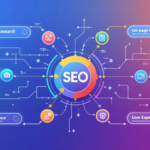
- Backlinks from other websites
- Brand mentions
- Online reputation
- Reviews and citations
- Authority and trust signals
Search engines use these signals to answer one core question:
“Can this website be trusted?”
Off-page SEO is how that trust is built.

Why Off-Page SEO Is Important
Search engines aim to rank the most reliable and authoritative results, not just the most keyword-optimised ones.
Here’s why off-page SEO matters:
- It helps search engines measure trust
- It separates real authority from self-promotion
- It supports rankings in competitive keywords
- It strengthens brand credibility
- It compounds long-term SEO growth
Even the best on-page SEO often hits a ceiling without off-page support. That’s why off-page SEO is essential once your on-page fundamentals are solid.
Core Elements of Off-Page SEO
Off-page SEO is not just about backlinks. It’s a combination of signals that work together.
The core elements include:
- Backlinks
- Brand mentions
- Authority and relevance
- Online reputation
- Reviews and citations
- Social visibility (indirectly)
Understanding these elements helps beginners focus on quality over shortcuts.
What Are Backlinks? (Off-Page SEO Basics Explained)
Backlinks are links from one website to another.
When another website links to your page, it tells search engines:
“This content is worth referencing.”
Search engines treat backlinks as votes of confidence. However, not all votes carry the same weight.
A link from a trusted, relevant website is far more valuable than dozens of links from low-quality or unrelated sites.
How Backlinks Work in Simple Terms
Think of backlinks like recommendations.
If:
- A respected expert recommends you → strong trust
- A random stranger recommends you → weaker trust
Search engines evaluate backlinks similarly by looking at:
- The authority of the linking site
- The relevance of the topic
- The context of the link
- How naturally the link appears
This is why beginners should focus on earning links, not chasing numbers.
Types of Backlinks Beginners Should Know
Understanding backlink types helps avoid confusion and fear.
Do-Follow vs No-Follow Links
Do-follow links
- Pass SEO value
- Help improve rankings
No-follow links
- Do not directly pass ranking value
- Still useful for traffic, visibility, and brand trust
Beginners should not ignore no-follow links. A natural backlink profile includes both.
Natural vs Artificial Links
Natural links
- Earned because content is useful
- Placed editorially
- Safest and most valuable
Artificial links
- Paid or manipulated
- Often risky
- Can cause penalties if abused
Beginners should always prioritise natural and earned links.
Quality vs Quantity in Backlinks
One of the most important off-page SEO basics is this:
One high-quality backlink can outperform 100 low-quality backlinks.
Search engines evaluate backlink quality based on:
- Website authority
- Topic relevance
- Editorial context
- Trustworthiness
Beginners often make the mistake of chasing volume. This usually leads to spammy links that do more harm than good.
Safe Link Building Basics for Beginners
Off-page SEO doesn’t have to be risky. Here are safe, beginner-friendly ways to build authority.
Create Link-Worthy Content
The safest way to earn backlinks is to publish content that:
- Solves real problems
- Explains topics clearly
- Offers original insights
- Is genuinely useful
When content is valuable, links happen naturally over time.
Guest Posting (Beginner Understanding)
Guest posting means writing content for another website in your niche and getting a contextual link in return.
For beginners:
- Choose relevant websites
- Focus on quality, not scale
- Avoid spammy sites
- Write helpful, non-promotional content
Guest posting works best when done selectively and honestly.
Brand Mentions and Citations
Even when websites mention your brand without linking, it still helps build authority.
Search engines recognise:
- Brand consistency
- Repeated mentions
- Contextual relevance
Over time, brand mentions support trust signals and visibility.
Directory Links (When They Help)
Not all directories are bad.
Beginner-safe directories include:
- Business directories
- Industry-specific listings
- Local directories
Avoid mass-submission or spam directories. Quality and relevance matter.
Brand Mentions and Authority Signals
Off-page SEO is increasingly about brand authority, not just links.
Search engines look at:
- How often your brand is mentioned
- Where it’s mentioned
- In what context
- Consistency across platforms
A strong brand presence supports rankings even when links are limited.
Role of Social Media in Off-Page SEO
Social media does not directly affect rankings, but it plays an indirect role.
Social platforms help by:
- Increasing content visibility
- Driving traffic
- Supporting brand discovery
- Encouraging natural links
Beginners should see social media as a distribution and visibility channel, not a ranking hack.
Online Reputation and Reviews (Off-Page SEO Factor)
For businesses, reviews are a major off-page SEO signal.
Reviews:
- Build trust
- Influence local rankings
- Affect click-through rates
- Shape brand perception
Search engines value authentic, consistent reviews, not fake or forced ones.
Beginners should focus on:
- Encouraging honest feedback
- Responding professionally
- Maintaining a positive online presence
Local Off-Page SEO Basics
Local businesses rely heavily on off-page signals.
Key local off-page SEO elements include:
- Google Business Profile optimisation
- Consistent name, address, and phone details
- Local citations
- Local backlinks
- Reviews and ratings
Local off-page SEO often delivers faster results than national SEO when done correctly.
What Beginners Should Avoid in Off-Page SEO
Many beginners harm their SEO by following shortcuts.
Avoid these completely:
- Buying backlinks
- Link farms or private blog networks
- Spam comments and forum links
- Over-optimised anchor text
- Automated link-building tools
These tactics may work briefly but often lead to penalties or long-term damage.
How Long Does Off-Page SEO Take to Work?
Off-page SEO is slower than on-page SEO but more powerful long-term.
Typical timelines:
- Initial signals: a few months
- Authority building: 6–12 months
- Strong competitive impact: long-term
Off-page SEO compounds over time. Patience is essential.
Off-Page SEO vs On-Page SEO (Quick Comparison)
On-page SEO
- Content and structure
- Fully under your control
- Faster initial improvements
Off-page SEO
- Trust and authority
- External signals
- Slower but long-lasting impact
Beginners should master on-page SEO first, then gradually invest in off-page SEO.
Can Beginners Do Off-Page SEO Without Tools?
Yes. Off-page SEO basics do not require paid tools.
Beginners can:
- Create valuable content
- Build relationships
- Earn mentions naturally
- Focus on brand consistency
Tools can help analyse backlinks later, but they are not required to start safely.
Off-Page SEO Checklist for Beginners
Before focusing on off-page SEO, check the following:
- On-page SEO is solid
- Content is genuinely useful
- Brand name is consistent online
- Backlinks are natural and relevant
- No spammy tactics used
- Patience is maintained
This checklist keeps beginners on the safe path.
Frequently Asked Questions
Is off-page SEO necessary?
Yes. It supports trust and authority, especially in competitive niches.
Are backlinks still important?
Yes, but quality matters far more than quantity.
Can beginners build backlinks safely?
Absolutely, by focusing on content and relevance.
How many backlinks do I need?
There is no fixed number. Quality and relevance matter more.
Is off-page SEO risky?
Only if shortcuts are used. Ethical off-page SEO is safe and effective.
Off-page SEO is not about tricks or manipulation. It’s about earning trust over time.
For beginners, the goal is not to build hundreds of links quickly. The goal is to:
- Create value
- Build credibility
- Earn recognition naturally
When off-page SEO is done patiently and ethically, it becomes one of the strongest long-term ranking factors. Focus on quality, avoid shortcuts, and let authority grow naturally.