



If you have ever searched for something on Google and clicked one of the first few results, you’ve already experienced the power of SEO — whether you realised it or not.
- What Does SEO Stand For?
- What Is SEO in Simple Words?
- How Do Search Engines Work?
- Why Is SEO Important?
- Types of SEO Explained
- How SEO Works Step by Step
- What Are Keywords in SEO?
- What Is On-Page SEO? (Detailed)
- What Is Off-Page SEO? (Detailed)
- What Is Technical SEO? (Detailed)
- SEO vs SEM vs PPC
- How Long Does SEO Take to Show Results?
- Is SEO Free or Paid?
- Common SEO Myths
- SEO Best Practices for Beginners
- Can You Learn SEO Yourself?
- SEO for Businesses vs Blogs
- The Future of SEO
- Frequently Asked Questions
- Final Thoughts
SEO plays a silent but critical role in how websites are discovered, trusted, and chosen online. From blogs and eCommerce stores to service businesses and startups, SEO determines who gets seen and who stays invisible.
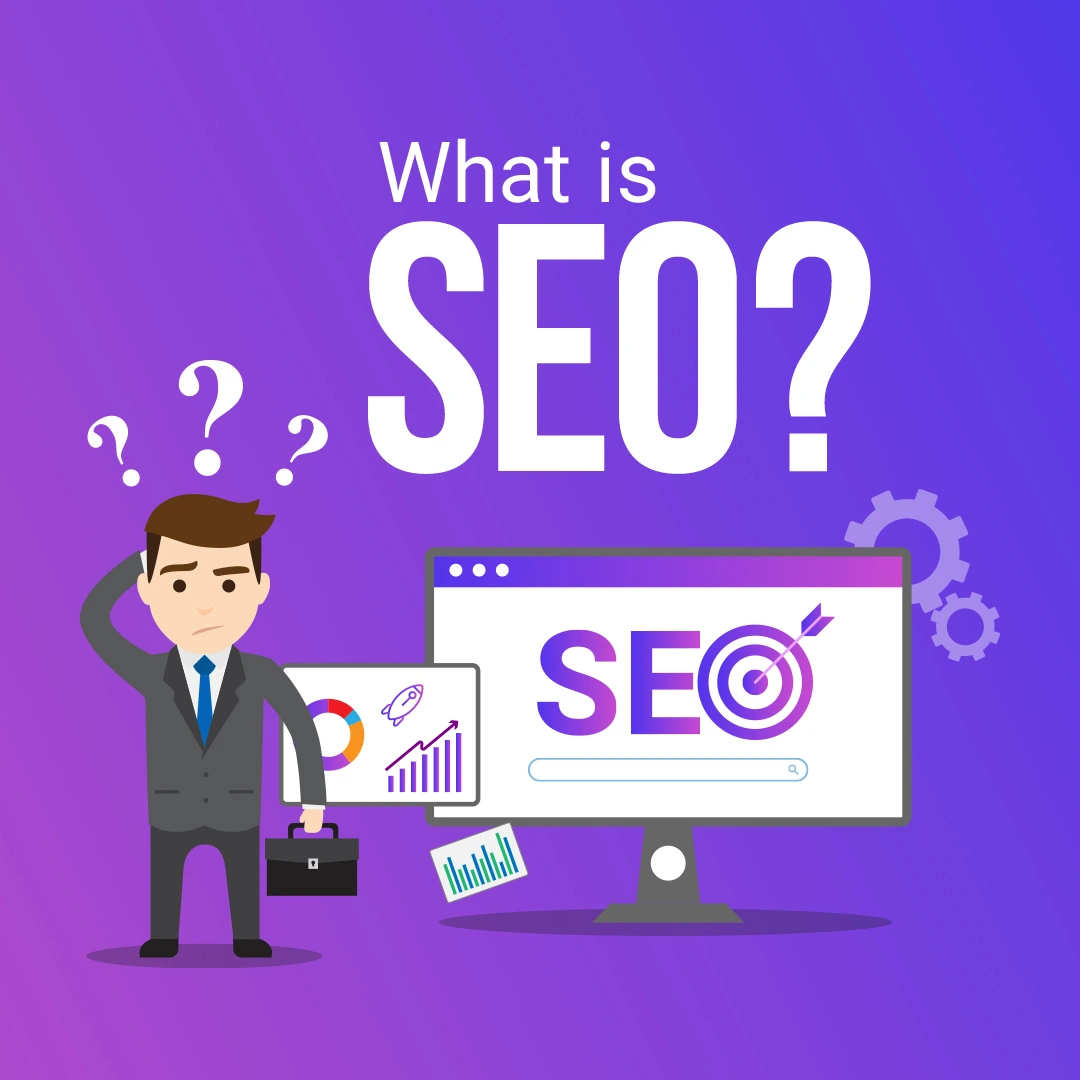
In this in-depth guide, we’ll break down what is SEO, how it works, why it matters, and how beginners can understand and use it effectively — without confusing jargon or shallow explanations.
What Does SEO Stand For?
SEO stands for Search Engine Optimisation.
In simple terms, SEO is the process of improving a website so that it appears higher in search engine results when people search for relevant keywords.
Search engines like Google, Bing, and DuckDuckGo aim to show users the most useful and relevant results. SEO helps search engines understand your website better — and helps your website match what users are actually searching for.
What Is SEO in Simple Words?
SEO is about helping your website get found on Google without paying for ads.
Think of Google as a massive digital library. Every website is a book, and SEO is how your book gets:

- Categorised correctly
- Displayed on the front shelf
- Recommended instead of buried in storage
If your website has good SEO, Google understands:
- What your page is about
- Who it’s for
- Why it deserves attention
Without SEO, even the best content can remain invisible.
How Do Search Engines Work?
To understand SEO properly, you need to understand how search engines function behind the scenes.
1. Crawling
Search engines use bots (often called spiders) to discover pages across the internet. These bots follow links from one page to another and “crawl” content.
2. Indexing
Once a page is crawled, search engines store and organise its content in a massive database called an index. If your page isn’t indexed, it won’t appear in search results.
3. Ranking
When a user types a query, the search engine:
- Analyses the search intent
- Searches its index
- Ranks pages based on relevance, quality, and authority
SEO influences all three stages — crawling, indexing, and ranking.
Why Is SEO Important?
SEO isn’t just a marketing tactic — it’s a foundation for online growth.
1. Organic Traffic Is Free
Unlike paid ads, SEO doesn’t charge you for every click. Once your page ranks, traffic continues without recurring ad spend.
2. Builds Trust and Credibility
People trust organic search results more than ads. Ranking high signals authority and reliability.
3. Long-Term Results
A well-optimised page can generate traffic for years with minimal updates.
4. Better User Experience
SEO improves site speed, readability, mobile usability, and navigation — all of which benefit users.
5. Higher Conversion Rates
Search traffic often converts better because users are actively looking for answers or solutions.
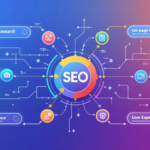
Types of SEO Explained
SEO isn’t a single action — it’s a combination of different strategies working together.
On-Page SEO
On-page SEO focuses on everything inside your website.
This includes:
- Keyword optimisation
- High-quality content
- Headings and structure
- Meta titles and descriptions
- Internal linking
- Image optimisation
On-page SEO ensures your content clearly communicates its topic and value to both users and search engines.
Off-Page SEO
Off-page SEO refers to actions taken outside your website that affect rankings.
The most important factor here is backlinks — links from other websites pointing to yours.
Search engines treat backlinks like votes of confidence. The more authoritative the source, the stronger the signal.
Off-page SEO also includes:
- Brand mentions
- Guest posting
- Digital PR
- Social signals (indirectly)
Technical SEO
Technical SEO ensures that search engines can crawl, index, and rank your website efficiently.
Key aspects include:
- Website speed
- Mobile-friendliness
- Secure HTTPS connection
- Clean URL structure
- Core Web Vitals
- Proper indexing and sitemap setup
Without solid technical SEO, even great content can struggle to rank.
Local SEO
Local SEO helps businesses appear in location-based searches, especially for services.
It includes:
- Google Business Profile optimisation
- Local keywords
- Reviews and ratings
- NAP consistency (Name, Address, Phone)
Local SEO is critical for restaurants, clinics, service providers, and brick-and-mortar businesses.
How SEO Works Step by Step
SEO isn’t magic — it follows a structured process.
- Keyword Research – Finding what people are searching for
- Content Creation – Creating valuable, relevant content
- On-Page Optimisation – Structuring content correctly
- Technical Optimisation – Improving site performance
- Link Building – Earning authority signals
- Tracking & Improvement – Monitoring results and refining strategy
Each step builds on the previous one.
What Are Keywords in SEO?
Keywords are the phrases people type into search engines.
There are different types of keywords:
- Short-tail keywords (e.g., “SEO”)
- Long-tail keywords (e.g., “what is SEO for beginners”)
Long-tail keywords usually have:
- Lower competition
- Clearer intent
- Higher conversion potential
SEO isn’t about stuffing keywords — it’s about matching user intent.
What Is On-Page SEO? (Detailed)
On-page SEO ensures your content is readable, structured, and relevant.
Key elements include:
Title Tags
Your page title should clearly describe the content and include the main keyword.
Meta Descriptions
These influence click-through rates and help users understand what to expect.
Headings (H1–H3)
Proper heading structure improves readability and SEO clarity.
Content Optimisation
Content should be:
- Original
- In-depth
- Helpful
- Easy to understand
Internal Links
Linking to related pages improves navigation and SEO value distribution.
What Is Off-Page SEO? (Detailed)
Off-page SEO is about authority and reputation.
Backlinks remain one of the strongest ranking factors because they signal trust.
Quality matters more than quantity:
- One strong backlink can outperform dozens of weak ones
- Natural links are safer than manipulative tactics
Avoid black-hat practices like buying spam links — they often cause penalties.
What Is Technical SEO? (Detailed)
Technical SEO ensures your site performs well behind the scenes.
Important components:
- Fast loading pages
- Mobile-first design
- Clean code
- Structured data
- Proper redirects
Technical SEO often requires audits and regular maintenance but provides strong long-term benefits.
SEO vs SEM vs PPC
These terms are often confused.
- SEO – Organic, long-term traffic
- SEM – Search engine marketing (SEO + ads)
- PPC – Paid ads where you pay per click
SEO builds lasting visibility, while PPC offers immediate results.
How Long Does SEO Take to Show Results?
SEO is not instant.
Typical timelines:
- New websites: 3–6 months
- Competitive niches: 6–12 months
- Established sites: faster improvements
SEO rewards patience and consistency.
Is SEO Free or Paid?
SEO itself is free, but tools, content creation, and expertise may cost money.
You can:
- Learn SEO and do it yourself
- Use paid tools for efficiency
- Hire professionals for faster results
The return on investment is often much higher than paid advertising.
Common SEO Myths
- SEO is dead
- SEO gives instant rankings
- Keywords don’t matter anymore
- Backlinks are useless
In reality, SEO is evolving — not disappearing.
SEO Best Practices for Beginners
- Focus on search intent
- Write for humans first
- Be consistent
- Avoid shortcuts
- Track performance
Good SEO is built, not hacked.
Can You Learn SEO Yourself?
Yes — many successful SEO professionals are self-taught.
SEO requires:
- Curiosity
- Practice
- Patience
- Analytical thinking
It’s a valuable skill for bloggers, marketers, freelancers, and business owners.
SEO for Businesses vs Blogs
Business SEO focuses on:
- Leads
- Local visibility
- Conversions
Blog SEO focuses on:
- Traffic
- Authority
- Monetisation
Both rely on the same SEO principles.
The Future of SEO
SEO is becoming more:
- User-focused
- Experience-driven
- Intent-based
AI, voice search, and zero-click results are shaping the future — but quality content remains essential.
Frequently Asked Questions
Is SEO still relevant?
Yes — more than ever.
Is SEO difficult?
It’s learnable with consistency.
Does SEO work for small businesses?
Absolutely, especially with local SEO.
Can SEO increase traffic?
Yes — often dramatically.
Final Thoughts
SEO is not about gaming search engines.
It’s about creating valuable content, improving user experience, and earning trust over time.
If you understand SEO, you gain a powerful advantage in the digital world — one that compounds with every page you optimise.