



The way people discover businesses has completely changed. Earlier, customers relied on word of mouth, newspapers, hoardings, or physical visits. Today, the first thing most people do before buying a product or hiring a service is search on Google.
- What Is SEO in a Business Context?
- Why SEO Is Important for Businesses
- SEO Helps Businesses Get Discovered Online
- SEO Drives High-Quality Organic Traffic
- SEO Builds Trust and Brand Authority
- SEO Is Cost-Effective Marketing for Businesses
- SEO Gives Small Businesses a Competitive Advantage
- SEO Improves Website Experience and Usability
- SEO Supports the Entire Marketing Funnel
- Importance of Local SEO for Businesses
- SEO Helps Businesses Build Long-Term Growth
- SEO vs Paid Advertising for Businesses
- How SEO Impacts Sales and Revenue
- Importance of SEO for Different Types of Businesses
- Common Myths About SEO for Businesses
- How Long Does SEO Take to Benefit a Business?
- Is SEO Necessary for Businesses in 2026 and Beyond?
- How Businesses Can Start SEO (Beginner Approach)
- Benefits of SEO for Business (Quick Summary)
- Frequently Asked Questions
If your business does not appear when potential customers search online, you are practically invisible — no matter how good your product or service is. This is where SEO becomes critical.
SEO is no longer optional. It is one of the most powerful tools a business can use to grow sustainably, build trust, and generate consistent leads. In this detailed guide, we will break down the importance of SEO for business, explain how it impacts growth, and why every business — small or large — should invest in it.
What Is SEO in a Business Context?
SEO, or Search Engine Optimisation, is the process of optimising a business website so that it appears higher in search engine results when potential customers search for relevant keywords.
From a business perspective, SEO is not just about rankings or traffic. It is about:
- Being visible at the right time
- Reaching customers when they are actively searching
- Turning search demand into leads and sales
For businesses, SEO works as a demand-capturing channel. Instead of pushing ads in front of people who may not be interested, SEO allows businesses to appear exactly when users are looking for solutions.
Why SEO Is Important for Businesses
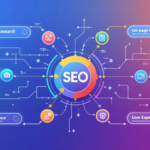
The importance of SEO for business lies in its ability to connect businesses with customers organically, consistently, and cost-effectively.
Here are the key reasons why SEO matters so much for businesses today.

SEO Helps Businesses Get Discovered Online
Most buying journeys start with a search engine.
Whether it’s:
- “best digital marketing agency near me”
- “affordable interior designer”
- “SEO services for small business”
- “buy running shoes online”
If your business doesn’t appear on the first page, your chances of being discovered drop drastically.
SEO ensures that:
- Your business appears when people search for related services or products
- You don’t lose customers to competitors who rank higher
- Your online presence works even when you are not actively marketing
Without SEO, even a professionally designed website may fail to bring customers.
SEO Drives High-Quality Organic Traffic
Not all traffic is equal. SEO brings high-intent traffic, which is extremely valuable for businesses.
Organic search traffic is different from social or random referral traffic because:
- Users are actively searching for something
- They already have a need or problem
- They are closer to making a decision
For example, someone searching “SEO agency for small business” is far more likely to convert than someone casually scrolling social media.
This is why SEO traffic often:
- Converts better
- Has lower bounce rates
- Generates higher ROI
SEO Builds Trust and Brand Authority
People trust Google. When your business ranks on the first page, users subconsciously trust your brand more.
High search rankings signal:
- Credibility
- Authority
- Reliability
Even if users don’t click your website immediately, seeing your business name repeatedly in search results builds brand recognition.
Over time, SEO helps businesses become industry authorities, which directly impacts conversions and long-term growth.
SEO Is Cost-Effective Marketing for Businesses
One of the biggest advantages of SEO is its cost-effectiveness.
Unlike paid advertising:
- You don’t pay per click
- Traffic doesn’t stop when campaigns end
- Results compound over time
While SEO requires investment in content, optimisation, and expertise, the long-term return is significantly higher compared to many traditional marketing channels.
For small and medium businesses with limited budgets, SEO offers a sustainable way to compete without spending heavily on ads every month.
SEO Gives Small Businesses a Competitive Advantage
A common myth is that SEO only works for big companies. In reality, SEO often benefits small businesses even more.
Small businesses can:
- Target local and niche keywords
- Focus on specific services or locations
- Compete with larger brands through relevance and intent
Local SEO, in particular, allows small businesses to dominate searches in their area, even if they cannot match the advertising budgets of big brands.
SEO Improves Website Experience and Usability
SEO is not just about search engines — it is also about users.
Good SEO practices improve:
- Website speed
- Mobile responsiveness
- Navigation
- Content readability
- Overall user experience
Search engines prioritise websites that provide a smooth, helpful experience. As a result, SEO improvements often lead to:
- Lower bounce rates
- Higher engagement
- Better conversion rates
This makes SEO beneficial not only for traffic but also for overall website performance.
SEO Supports the Entire Marketing Funnel
SEO plays a role at every stage of the customer journey.
Awareness Stage
Users search for informational queries. SEO content helps introduce your brand.
Consideration Stage
Users compare options. SEO helps your business appear as a strong contender.
Decision Stage
Users search with transactional intent. SEO helps convert searches into leads or sales.
Post-Purchase Stage
SEO content supports customers with guides, FAQs, and resources, increasing retention and trust.
Unlike ads, SEO doesn’t focus only on conversions — it supports long-term brand growth.
Importance of Local SEO for Businesses
Local SEO is especially important for businesses that serve specific locations.
Local SEO helps businesses appear in:
- “Near me” searches
- Google Maps results
- Local service queries
Optimising Google Business Profile, reviews, and local keywords allows businesses to:
- Attract nearby customers
- Increase foot traffic
- Build local credibility
For restaurants, clinics, service providers, and retail stores, local SEO can be the biggest source of customers.
SEO Helps Businesses Build Long-Term Growth
SEO is a long-term investment, not a quick win.
Over time:
- Content gains authority
- Rankings improve
- Traffic becomes more consistent
- Customer acquisition costs reduce
Unlike paid ads or social platforms that change frequently, SEO builds digital assets that continue to deliver value.
Businesses that invest in SEO early often dominate their niche later.
SEO vs Paid Advertising for Businesses
Both SEO and paid ads have their place, but they serve different purposes.
Paid Advertising
- Immediate results
- Stops when budget stops
- Increasing costs over time
SEO
- Takes time
- Long-lasting results
- Lower cost per acquisition in the long run
The most successful businesses often use paid ads for short-term gains and SEO for sustainable growth.
How SEO Impacts Sales and Revenue
SEO is not just about traffic — it directly affects revenue.
SEO helps businesses:
- Generate qualified leads
- Improve conversion rates
- Reduce dependency on paid marketing
- Increase lifetime customer value
When done correctly, SEO becomes a revenue-generating channel rather than a marketing expense.
Importance of SEO for Different Types of Businesses
SEO for Small Businesses
SEO helps small businesses:
- Compete locally
- Reach customers affordably
- Build trust without large budgets
SEO for Service-Based Businesses
Service businesses benefit from SEO by:
- Capturing high-intent searches
- Generating consistent enquiries
- Building local authority
SEO for eCommerce Businesses
For eCommerce, SEO:
- Improves product discovery
- Drives organic sales
- Reduces reliance on ads
Common Myths About SEO for Businesses
- SEO takes too long to work
- SEO is too technical
- SEO is dead
- Only big brands benefit from SEO
In reality, SEO continues to evolve and remains one of the most effective business growth strategies.
How Long Does SEO Take to Benefit a Business?
SEO timelines depend on:
- Competition
- Website age
- Industry
- Consistency
Most businesses see early improvements within 3–6 months, with stronger results over time.
SEO rewards patience and consistency.
Is SEO Necessary for Businesses in 2026 and Beyond?
Search behaviour is evolving, but SEO is not disappearing.
Even with AI tools and voice search, people still:
- Search for answers
- Compare services
- Look for trusted businesses
SEO adapts with technology and remains essential for online visibility.
How Businesses Can Start SEO (Beginner Approach)
Businesses can start SEO by:
- Understanding their target audience
- Researching relevant keywords
- Creating helpful content
- Optimising website basics
- Tracking performance
Businesses can choose between in-house SEO, freelancers, or agencies depending on budget and goals.
Benefits of SEO for Business (Quick Summary)
- Increased visibility
- High-quality traffic
- Brand trust
- Cost-effective marketing
- Long-term growth
- Competitive advantage
Frequently Asked Questions
Why is SEO important for business growth?
SEO connects businesses with customers when they are actively searching, driving sustainable growth.
Can a business survive without SEO?
It can, but it will struggle to compete online.
Is SEO worth it for small businesses?
Yes, especially for local and service-based businesses.
Does SEO really increase sales?
When done correctly, SEO directly impacts leads and revenue.
The importance of SEO for business cannot be overstated. In a world where customers search before they buy, SEO ensures your business is visible, trusted, and chosen.
SEO is not a shortcut — it is a long-term growth strategy that builds authority, traffic, and revenue over time. Businesses that invest in SEO today position themselves for consistent success tomorrow.